How AI Automation is Transforming Modern Businesses in 2026
Admin User | Jun 15, 2026 | 0 views
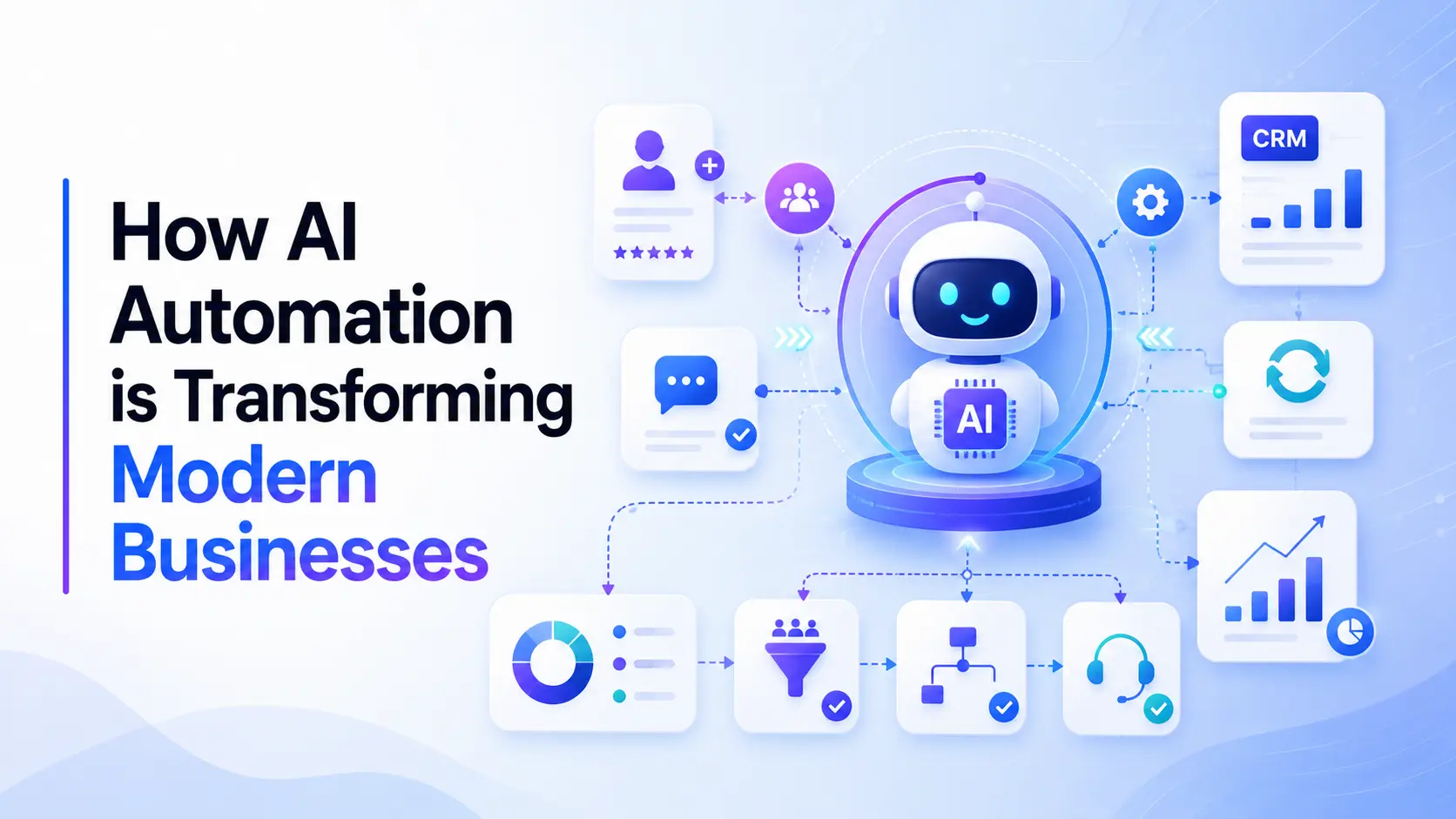
The Rise of AI Automation
Artificial Intelligence (AI) automation is transforming how modern businesses operate. What was once considered a technology reserved for large enterprises is now accessible to startups, small businesses, and growing organizations. From customer support automation to intelligent workflow management, AI is helping companies increase productivity while reducing operational costs.
Businesses today face growing demands for faster response times, improved customer experiences, and streamlined internal operations. AI automation addresses these challenges by handling repetitive tasks, analyzing data, and supporting decision-making processes in real time.
Whether it's managing leads, automating follow-ups, processing customer requests, or integrating multiple business tools, AI allows teams to focus on strategic initiatives instead of manual work.
Key Benefits of AI Automation
Reduced Labor Costs
One of the biggest advantages of AI automation is its ability to eliminate repetitive and time-consuming tasks. Businesses can automate activities such as data entry, lead qualification, appointment scheduling, and email responses.
By reducing the amount of manual work required, organizations can allocate resources more effectively and improve overall productivity.
24/7 Customer Support
Modern customers expect instant responses regardless of the time of day. AI-powered chatbots and virtual assistants provide continuous support by answering common questions, collecting information, and guiding users through various processes.
This improves customer satisfaction while significantly reducing the workload on support teams.
Improved Accuracy and Consistency
Human errors can lead to lost opportunities, inaccurate data, and operational inefficiencies. AI automation follows predefined workflows consistently, ensuring that tasks are completed accurately every time.
Automated systems can synchronize information between CRM platforms, marketing tools, and operational software without manual intervention.
Faster Business Operations
Automation accelerates routine business processes by reducing delays and eliminating bottlenecks. Tasks that once took hours can often be completed in seconds through intelligent workflows.
This enables businesses to respond more quickly to customers, process information faster, and improve overall operational efficiency.
How Custom AI Agents Are Changing Businesses
Custom AI agents represent the next evolution of business automation. Unlike traditional chatbots that rely on simple predefined responses, AI agents can understand context, perform actions, access business data, and execute complex workflows.
For example, a custom AI sales agent can engage with website visitors, qualify leads, schedule meetings, update CRM records, and send personalized follow-up messages automatically.
These capabilities allow businesses to create seamless customer experiences while reducing the need for manual intervention.
AI-Powered CRM Automation
Customer Relationship Management systems are central to sales and customer success operations. Integrating AI with CRM platforms helps businesses automate and optimize customer interactions throughout the entire customer journey.
Lead Qualification
AI can analyze incoming leads based on predefined criteria and automatically identify high-priority opportunities.
Automated Follow-Ups
Businesses can ensure that no lead is forgotten by automatically sending emails, reminders, and follow-up messages based on customer actions.
Customer Insights
AI analyzes customer behavior and interaction history to provide valuable insights that help improve marketing and sales strategies.
Sales Forecasting
Predictive analytics allows organizations to anticipate future sales trends and make data-driven business decisions.
Industries Benefiting from AI Automation
AI automation is creating significant advantages across multiple industries.
- Healthcare organizations use AI for patient support, appointment scheduling, and administrative workflows.
- Real estate companies automate lead management and client communication.
- E-commerce businesses use AI for customer service, product recommendations, and inventory management.
- Financial institutions leverage automation for compliance monitoring and fraud detection.
- Professional service providers streamline client onboarding and workflow management.
How to Get Started with AI Automation
The first step toward successful AI implementation is identifying repetitive tasks that consume valuable employee time. Businesses should evaluate their workflows and determine where automation can deliver the greatest impact.
Common starting points include customer support, lead management, CRM processes, appointment scheduling, and data entry tasks.
After identifying opportunities, organizations can implement automation gradually, measure results, and expand their AI capabilities over time.
The Future of AI Automation
As technology continues to advance, AI automation will become even more powerful and accessible. Businesses can expect smarter AI agents, deeper software integrations, advanced predictive analytics, and increasingly personalized customer experiences.
Organizations that embrace AI automation today will be better positioned to compete, innovate, and scale in the future.
Conclusion
AI automation is no longer a luxury reserved for large corporations. It has become an essential tool for businesses seeking to improve efficiency, reduce costs, and deliver exceptional customer experiences.
From custom AI agents and intelligent chatbots to CRM automation and workflow optimization, AI is transforming modern business operations. Companies that adopt these technologies now will gain a significant competitive advantage in the years ahead.