The Complete Guide to High-Converting Web Design
Admin User | Jun 15, 2026 | 0 views
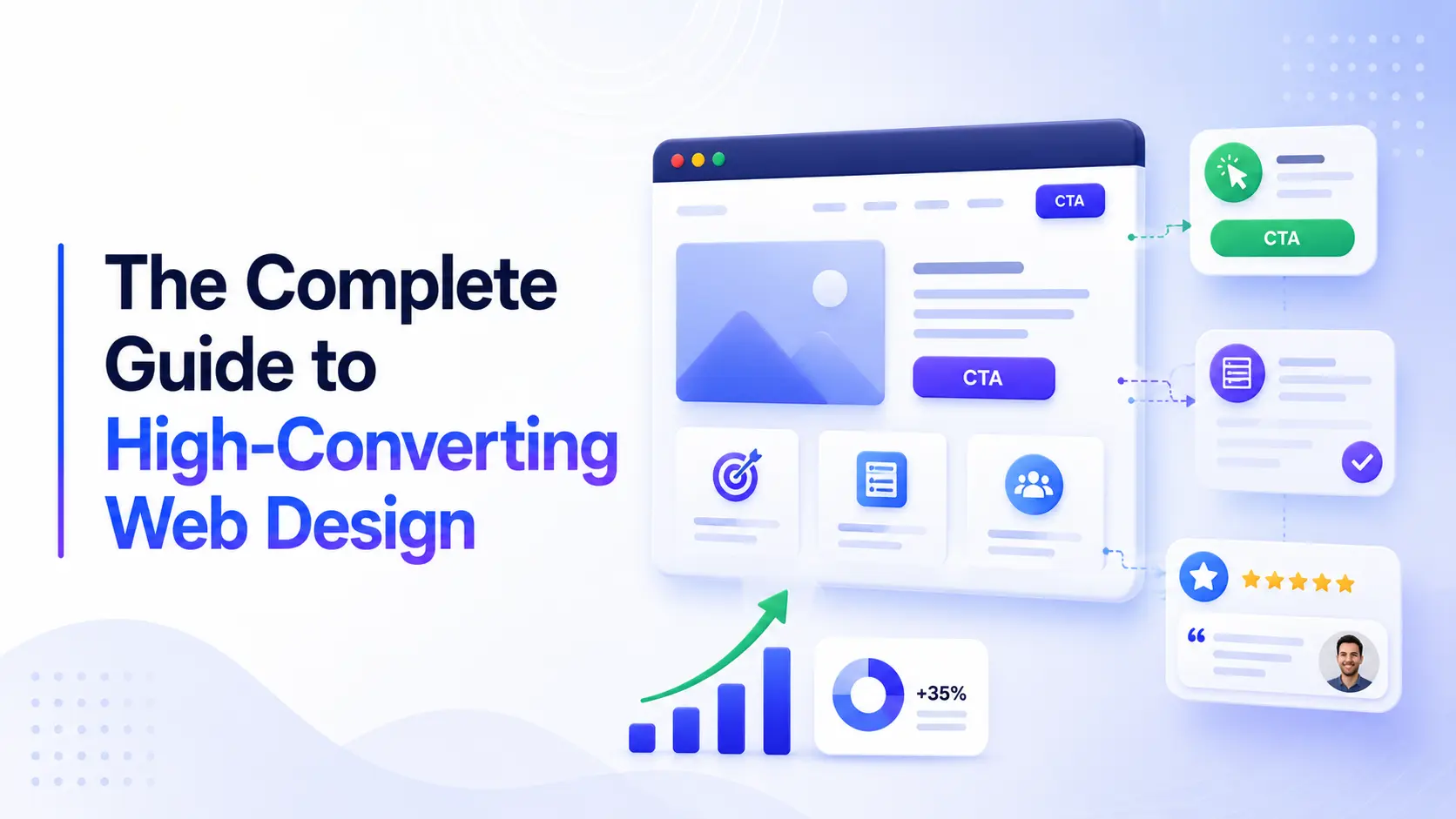
Why High-Converting Web Design Matters
A visually appealing website can attract visitors, but appearance alone does not generate leads or sales. Successful websites are designed with a clear purpose: guiding users toward taking meaningful actions. Whether the goal is generating inquiries, booking consultations, or completing purchases, every design decision should support conversion.
High-converting web design combines aesthetics, usability, and strategy to create an experience that encourages visitors to engage with your business.
CRO vs Web Design: Understanding the Difference
Web design focuses on the visual presentation and user experience of a website. Conversion Rate Optimization (CRO) focuses on increasing the percentage of visitors who complete a desired action.
While attractive design helps establish credibility and trust, CRO ensures that users are guided through a clear path that leads to conversions.
The most successful websites balance both elements by combining modern design with strategic conversion-focused practices.
1. Create Clear Calls to Action
Every page should have a primary goal and a clear call to action. Visitors should immediately understand what action they need to take next.
Whether it is requesting a quote, scheduling a consultation, downloading a resource, or making a purchase, your call-to-action buttons should stand out and be easy to find.
- Use action-oriented language
- Place CTAs above the fold
- Use contrasting colors
- Keep messaging clear and direct
2. Simplify Navigation
Complicated navigation can frustrate visitors and increase bounce rates. A well-structured navigation menu helps users quickly find the information they need.
Keep menus simple, organize content logically, and avoid overwhelming visitors with too many options.
3. Optimize Contact Forms
Forms play a critical role in lead generation. Long and complicated forms often discourage users from completing them.
Reduce friction by only asking for essential information. The easier a form is to complete, the higher the likelihood of conversion.
- Limit required fields
- Use clear labels
- Enable mobile-friendly input fields
- Provide confirmation messages
4. Build Trust with Social Proof
People are more likely to trust your business when they see evidence that others have had positive experiences.
Social proof can significantly improve conversion rates by reducing uncertainty and building credibility.
- Client testimonials
- Case studies
- Customer reviews
- Industry certifications
- Success metrics and results
5. Improve Website Speed
Page speed directly impacts both user experience and conversion rates. Slow websites often lose visitors before they have a chance to engage with the content.
Optimize performance by compressing images, minimizing unnecessary scripts, and using reliable hosting infrastructure.
Fast-loading websites create a smoother experience and encourage users to stay longer.
6. Design for Mobile Users
With mobile traffic accounting for a significant portion of website visits, responsive design is essential.
Your website should function seamlessly across all devices, including smartphones, tablets, and desktops.
Mobile optimization improves usability, engagement, and overall conversion performance.
7. Use Strategic Visual Hierarchy
Visual hierarchy helps guide users through your content and directs attention toward important elements.
Effective hierarchy can be achieved through:
- Clear headings and subheadings
- Consistent spacing
- Strategic use of colors
- Prominent CTA placement
- Readable typography
When users can easily scan and understand a page, they are more likely to take action.
8. Write Conversion-Focused Content
Website copy should communicate value clearly and address customer pain points. Visitors want to know how your product or service can solve their problems.
Focus on benefits rather than features and use persuasive language that encourages engagement.
Clear messaging improves trust and helps visitors make informed decisions.
9. Reduce Distractions
Too many competing elements can overwhelm users and reduce conversions.
Remove unnecessary popups, excessive animations, and cluttered layouts that distract visitors from your primary goal.
A clean and focused design helps users stay engaged and move through the conversion process more effectively.
10. Continuously Test and Optimize
High-converting websites are rarely created by chance. Continuous testing and optimization help identify opportunities for improvement.
Monitor user behavior, analyze conversion data, and experiment with different headlines, CTA placements, layouts, and form designs.
Small improvements can often lead to significant increases in conversion rates over time.
Common Web Design Mistakes That Hurt Conversions
- Slow page loading speeds
- Poor mobile experience
- Weak or unclear CTAs
- Overly complex forms
- Lack of trust signals
- Confusing navigation
- Cluttered page layouts
Avoiding these common mistakes can dramatically improve website performance and lead generation results.
Conclusion
A beautiful website is only effective when it helps achieve business objectives. High-converting web design combines visual appeal, user experience, and conversion-focused strategy to guide visitors toward meaningful actions.
By implementing proven CRO principles such as clear calls to action, frictionless forms, social proof, mobile optimization, and ongoing testing, businesses can transform their websites into powerful lead generation and revenue-driving assets.