Leveraging WhatsApp Business API for Automated Sales Funnels
Admin User | Jun 15, 2026 | 0 views
Why WhatsApp Has Become a Powerful Sales Channel
Modern customers expect instant communication and quick responses from businesses. Traditional channels such as email often struggle to maintain engagement, while messaging platforms provide direct and immediate interaction.
WhatsApp has become one of the most effective communication channels for businesses worldwide. With billions of active users and exceptionally high message open rates, it offers a unique opportunity to connect with prospects where they are most active.
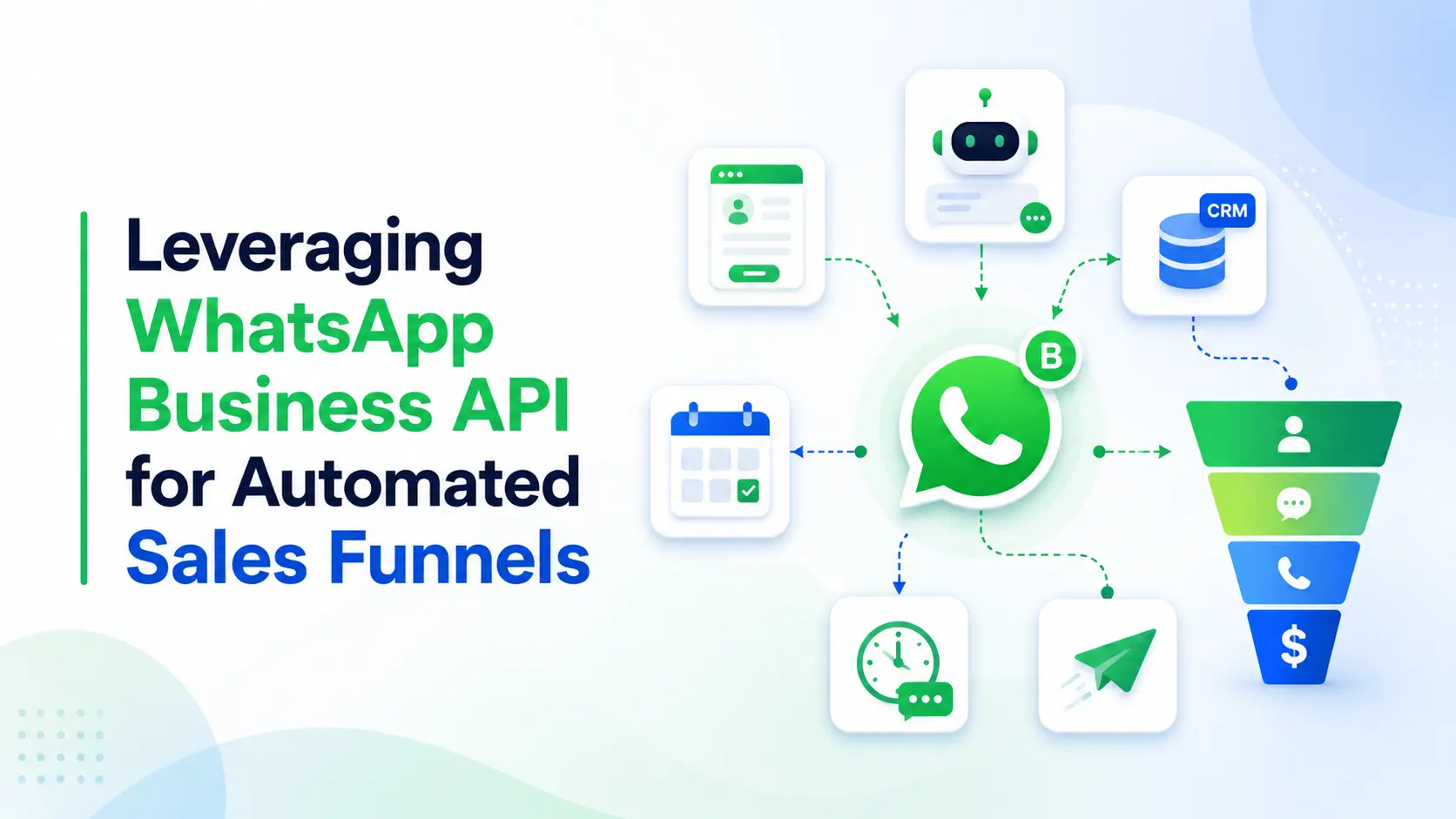
By integrating the WhatsApp Business API with your CRM and automation tools, businesses can create highly effective automated sales funnels that improve lead conversion rates while reducing manual effort.
The Benefits of Using WhatsApp Business API
The WhatsApp Business API allows businesses to automate conversations, manage customer interactions at scale, and integrate messaging directly into existing workflows.
Key advantages include:
- Real-time customer communication
- High engagement and response rates
- Automated lead qualification
- Personalized customer experiences
- CRM integration capabilities
- Scalable customer support and sales processes
These features make WhatsApp an ideal platform for building automated sales funnels.
What Is an Automated Sales Funnel?
An automated sales funnel is a system that guides prospects through the buying journey using predefined workflows and automation.
Instead of relying on manual follow-ups, businesses can automatically engage leads, qualify prospects, schedule meetings, and nurture customer relationships through intelligent automation.
When powered by WhatsApp Business API, these interactions become faster, more personal, and significantly more effective.
Step 1: Instant Lead Qualification
The first stage of an effective sales funnel is identifying qualified prospects.
When a user submits a website form, clicks an advertisement, or requests information, an automated WhatsApp workflow can begin immediately.
A chatbot can ask qualification questions such as:
- What service are you interested in?
- What is your budget?
- How soon do you need a solution?
- What challenges are you facing?
Based on the responses, leads can be automatically categorized and routed to the appropriate sales process.
Step 2: CRM Integration and Lead Management
Connecting WhatsApp Business API to a CRM system creates a seamless flow of customer information.
Every interaction can be automatically recorded and organized within your CRM platform.
This enables businesses to:
- Create contact records automatically
- Update lead statuses
- Assign leads to sales representatives
- Track customer interactions
- Monitor conversion performance
Automated CRM synchronization eliminates manual data entry and improves operational efficiency.
Step 3: Automatic Appointment Scheduling
Once a lead is qualified, the next goal is moving them toward a sales conversation.
Instead of relying on back-and-forth communication, WhatsApp automation can provide scheduling links that connect directly with calendar systems.
Customers can instantly book consultations, demos, or discovery calls without requiring assistance from a sales representative.
This reduces friction and significantly increases booking rates.
Step 4: Automated Follow-Up Sequences
Many sales opportunities are lost due to poor follow-up processes. Automated WhatsApp workflows ensure prospects remain engaged throughout the sales cycle.
Businesses can automatically send:
- Appointment confirmations
- Meeting reminders
- Educational content
- Special offers
- Follow-up messages after consultations
Consistent communication improves engagement and helps move prospects closer to conversion.
Reducing No-Show Rates with Automated Reminders
Missed appointments can negatively impact sales performance and waste valuable time.
WhatsApp automation allows businesses to send reminder messages before scheduled meetings. These reminders can include appointment details, calendar links, and rescheduling options.
Automated reminders help improve attendance rates and create a more reliable sales process.
Personalization at Scale
One of the most powerful advantages of WhatsApp Business API is the ability to personalize conversations automatically.
Using CRM data, businesses can customize messages based on:
- Customer names
- Previous interactions
- Purchase history
- Product interests
- Location and preferences
Personalized communication increases trust and significantly improves customer engagement.
Enhancing Customer Support Through Automation
WhatsApp automation is not limited to sales. Businesses can also improve customer support by providing instant responses to common questions.
Automated support workflows can help customers:
- Track orders
- Access account information
- Request assistance
- Schedule appointments
- Find answers to frequently asked questions
This creates a better customer experience while reducing support workload.
Industries Benefiting from WhatsApp Sales Automation
Businesses across multiple industries are using WhatsApp automation to improve customer acquisition and retention.
- Real estate agencies qualify property inquiries.
- Healthcare providers automate appointment scheduling.
- Educational institutions manage student inquiries.
- E-commerce businesses support customers and recover abandoned carts.
- Service providers automate consultations and follow-ups.
Best Practices for WhatsApp Sales Funnels
- Respond instantly to new inquiries.
- Keep messages clear and concise.
- Personalize communication whenever possible.
- Integrate WhatsApp with CRM systems.
- Use automation to assist rather than overwhelm users.
- Continuously optimize workflows based on performance data.
Following these best practices helps maximize engagement and conversion rates.
The Future of WhatsApp Business Automation
As businesses continue to embrace conversational commerce, WhatsApp will play an increasingly important role in customer acquisition and sales automation.
Advancements in AI-powered chatbots, CRM integrations, and workflow automation will enable businesses to deliver faster, smarter, and more personalized customer experiences.
Conclusion
WhatsApp Business API is transforming how businesses generate leads, nurture prospects, and close sales. By integrating WhatsApp with CRM platforms and automation tools, organizations can build efficient sales funnels that operate around the clock.
From instant lead qualification and automated scheduling to personalized follow-ups and customer support, WhatsApp automation helps businesses improve engagement, increase conversions, and scale their sales processes more effectively.